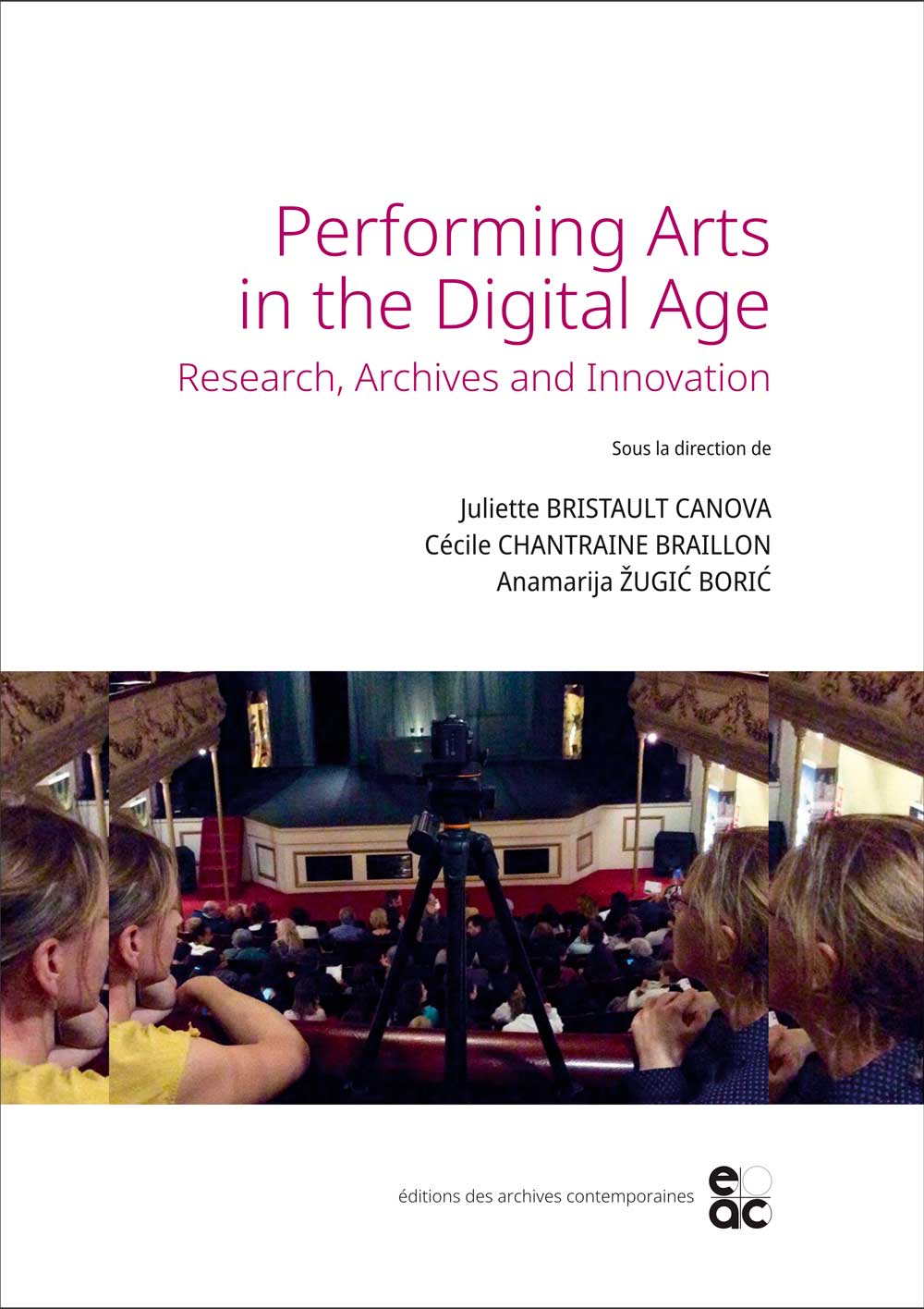
Performing Arts in the Digital Age



Présentation
The digital transition has profoundly reshaped the working practices of professionals and researchers in the Performing Arts. The systematic integration of digital technologies marks a far-reaching transformation in the communication, production, archiving, and study of performance practices. It requires not only the adaptation of established knowledge and skills, but also the acquisition of new competencies, alongside the development of emerging epistemologies and methodologies. This transformation also extends to artistic creation itself, whether through the use of digital tools, including artificial intelligence, in the production of artworks, or through works that are inherently born-digital, in part or in their entirety. Moreover, the relationship to performance has been fundamentally reconfigured: the condition of co-presence between performers and spectators within a shared space is altered, thereby transforming both the reception of the work and the dynamics of interaction between audiences and performers. Research in the Performing Arts has likewise been deeply affected by these digital shifts. Initially centered on the computerization of research based on written documentation related to performances, contemporary work within the field of the Digital Humanities now draws not only on technologies developed in other disciplines —thus fostering interdisciplinary approaches— but also on the creation of dedicated digital tools designed to address the specific challenges of Performing Arts research, notably the heterogeneity and abundance of documentation as well as the inherently ephemeral nature of performance.
Sommaire
- Introduction Digitized practices and researches : performing arts in the digital age Pluralism and Singularities p. 1–10 Juliette BRISTAULT CANOVA, Cécile CHANTRAINE BRAILLON, Anamarija ŽUGIĆ BORIĆ
- Convivial, Technovivial and Liminal Arts Pluralism and Singularities p. 11–18 Jorge Dubatti
- Unstable Grounds Scenic Performance Across Physical and Virtual Territories p. 19–28 Athina Masoura
- A visualization of Jean Duvignaud’s (1921–2007) socio-intellectual networks as an approach to the world of the Nouveau Théâtre in France in the 1950s p. 29–42 Laurène L’Hermite
- Attending to an artistic performance is more emotionally engaging than watching it on video p. 43–54 Cécile Chantraine Braillon, Laurence Willard, Yann Coello
- From “Individual Tinkering” to Collective Practices in Digital Humanities A Critical Look Back at the Earliest Stages in the Creation of an ACTiF (American Contemporary Theatre in France) Database p. 55–64 Samuel Lhuillery
- Challenges in Archiving Performing Arts The Eurokaz Digital Archive p. 65–74 Gordana Vnuk, Iva Brižan
- The Italian Theatres and Archives Registry, the IDOS_ARTS Research Centre and the HYPERSTAGE knowledge base for reconstructing theatrical productions p. 75–92 Donatella Gavrilovich
- Thymele: A Collaborative Digital Lexicon for Performing Arts in the Digital Age p. 93–112 Eleni Papalexiou, Avra Xepapadakou, Costas Vassilakis, Vassilis Poulopoulos
- Applying participatory media literacy to theatre studies? p. 113–120 Laurent Tessier
- Educating Students in Theatre through Digital Technology A Challenge for the School System p. 121–130 Adeline Chave
- Becoming a spectator with e-spect@tor The challenges of the digital theatre experience p. 131–142 Juliette Bristault Canova
- Authors p. 143–148
Pas encore de consultation enregistrée.