Le materialisation de l’original en traduction
Résumé
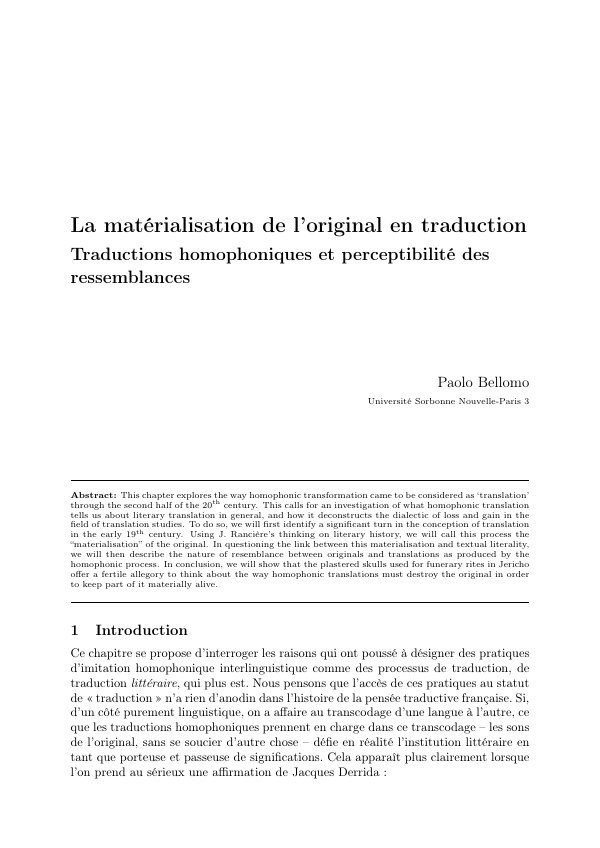
This chapter explores how homophonic practices came to be called ‘translation’ in the second half of the 20<sup>th</sup> century. This calls for an analysis of what homophonic translation tells us about literary translation in general and how it deconstructs the dialectic of loss and gain in the field of Translation Studies. To do so, this essay identifies a meaningful turn in translation thinking at the beginning of the 19<sup>th</sup> century: using Rancière’s hypothesis on literature’s history, this essay contends that such transformation is a “materialization of the original”. In questioning the junction between this materialization and the letter, the intent of this essay is to highlight the relationship of resemblance between originals and translations afforded by homophonic translation. Because they present borrowed, imprinted and sculpted matter, the plastered skulls used for funerary practice in Jericho offer a fertile allegory to think about the way homophonic translations must destroy the original in order to keep part of it materially alive.
Lire le chapitre
PDF de 13 pages, tel qu’imprimé dans l’ouvrage, pages 79 à 92. En libre accès.
Pas encore de consultation enregistrée.